
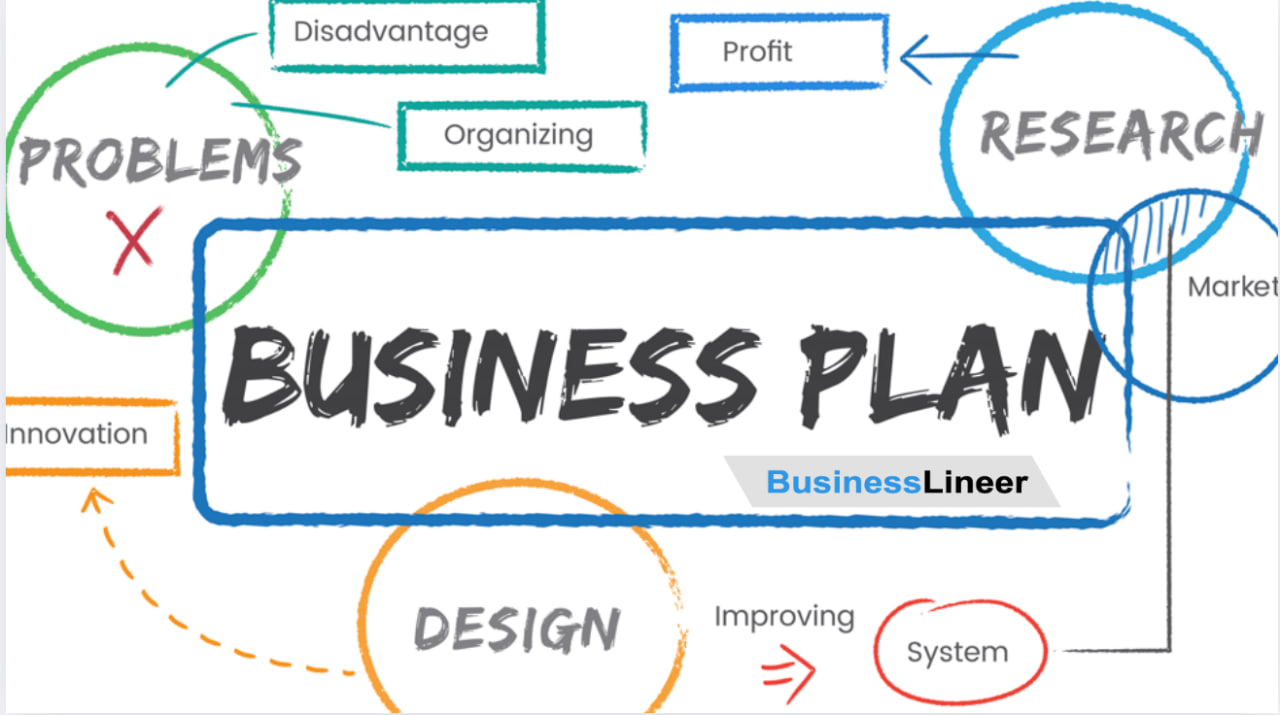
The DECA Independent Business Plan (IBP) is a key event in DECA’s competitive scene. It aims to encourage high school and college students to engage with entrepreneurial thinking, strategic planning, and professional presentation skills. Participants are tasked with creating a detailed 20-page business proposal for launching a new venture. They also need to present a convincing 15-minute pitch to a panel of industry judges, mimicking a real-world business pitch experience.
The IBP’s focus on depth, teamwork, and innovation makes it stand out. In contrast to the Start-Up Business Plan event, which restricts participants to a 10-page written plan and is designed for individuals, the Independent Business Plan welcomes teams of one to three students. This setup allows participants to collaborate, share responsibilities, and tackle their business ideas with greater complexity and creativity.
The IBP encourages students to dive into a variety of industries. Whether it’s a tech startup shaking up the norm, a traditional retail shop, a sustainable, eco-friendly brand, or a service-oriented business like a consulting firm or fitness coaching, the IBP allows students the freedom to turn their passions into reality through smart entrepreneurial strategies.
This event goes beyond just being a showcase of creativity; it’s a deep dive into research, critical thinking, and execution. Students are tasked with conducting thorough market analysis, demonstrating financial viability, evaluating the competition, and suggesting practical strategies for marketing, operations, and sustainability. From putting together a captivating executive summary to forecasting realistic financial outcomes, students are assessed on both the substance and the professional quality of their work.
The presentation aspect is essential. It challenges students to effectively express their ideas, justify their reasoning, answer questions from judges, and connect with their audience confidently and professionally—skills that are crucial for thriving in real-world business settings.
The DECA Independent Business Plan Examples event is a powerful simulation of real entrepreneurship, blending rigorous academic research with practical business development. It empowers students to think like CEOs, solve real-world problems, and prepare for future leadership in business and beyond.
Anatomy of a Winning Business Plan
Executive Summary:
This section is your elevator pitch. Judges read it first, so it must be concise yet compelling.
Structure:
- Mission Statement: 1–2 sentences.
- Example: “EduTutor connects high school students with Ivy League mentors for personalized SAT prep at half the cost of traditional services.”
- Problem Statement: Define the gap in the market.
- Example: “75% of students lack access to affordable, high-quality test prep.”
- Solution: Explain your product/service.
- Example: “A subscription platform offering live video tutoring, AI-driven practice tests, and progress tracking.”
- USP: Highlight uniqueness.
- Example: “Mentors are current Ivy League students—unlike competitors who use freelance tutors.”
Pro Tip: Use data visualization here. For example, embed a mini-bar chart showing market size growth.
DECA Independent Business Market Analysis
This section proves your idea is rooted in reality. Judges want to see rigorous research.
Sub-Sections:
- Target Audience:
- Demographics: Age, income, education, location.
- Example: “Ages 14–18, household income 60k–60k–120k, suburban U.S. families.”
- Psychographics: Values, pain points, behaviors.
- Example: “Parents prioritize education but distrust expensive prep programs.”
- Demographics: Age, income, education, location.
- Competitor Analysis:
- Direct Competitors: Kaplan, Princeton Review.
- Indirect Competitors: Free YouTube tutorials, library resources.
- Competitive Matrix: Compare features, pricing, and reviews.
| Feature | EduTutor | Kaplan | YouTube |
|---|---|---|---|
| Price/Month | $50 | $200 | Free |
| Live Tutoring | Yes | Yes | No |
| Ivy League Tutors | Yes | No | No |
Example: “The online education market grew by 22% in 2023, driven by post-pandemic demand for flexible learning.”
Problem Statement & Customer Segments
DECA Independent Business Market Trends:
Cite primary research (e.g., surveys) and secondary sources (e.g., IBISWorld reports).
A crisp problem statement defines the customer pain point your venture solves in no more than two paragraphs ﹘ avoid jargon and focus on real‑world impact. Bplans. Start by quantifying the problem’s scope (e.g., “25% of urban commuters report wasted time waiting for eco‑friendly bike‑share availability”) and then describe why existing solutions fall short.
Following the problem, develop a detailed customer persona by segmenting your market based on demographics, psychographics, and behavior. Digital Leadership. For each persona, include:
- Name & Profile: Age, occupation, income, location
- Pain Points: Specific frustrations related to your problem
- Goals & Motivations: What they seek in a solution
- Preferred Channels: How they discover and buy products/services
Use primary research (surveys, interviews) to validate assumptions and secondary sources (industry reports) to quantify segment sizes. Present persona “cards” side by side for quick comparison.
Unique Value Proposition & Solution Features
Your value proposition should be a single sentence that succinctly states why customers choose you over competitors, rs helpscout.com. For example:
Under this core statement, list your top three features or benefits, each with a 2–3‑sentence explanation and supporting evidence (user testimonials, prototype data) helpscout.com. Use a comparison table to show how your features outperform those of the two main competitors, highlighting unique attributes such as patented battery technology or proprietary routing algorithms.
Incorporate visual aids—icons for each feature and a succinct graphic illustrating the customer journey on your platform. This makes the solution both memorable and easy to understand at a glance.
Marketing & Sales Strategy
This section answers: How will you attract and retain customers?
Sub-Sections:
- Pricing Strategy:
- Cost-Plus Pricing: Calculate production costs + profit margin.
- Value-Based Pricing: Set prices based on perceived customer value.
- Example: “Charge $50/month—50% less than Kaplan but 3x free options, positioning EduTutor as affordable yet premium.”
- Distribution Channels:
- Direct Sales: Website subscriptions with a 7-day free trial.
- Partnerships: Collaborate with schools for bulk discounts.
- Promotion:
- Social Media: Run TikTok ads featuring student success stories.
- Referral Program: Offer a free month for every friend referred.
Financial Plan
The most technical but critical section. Judges scrutinize realism and attention to detail.
Sub-Sections:
- Startup Costs:
- Fixed Costs: Website development (10k), tutor training (10k),tutortraining(5k).
- Variable Costs: Server hosting (200/month), marketing(200/month), marketing(2k/month).
- Revenue Projections:
- Year 1: 1,000 subscribers x 50/month=50/month=600k/year.
- Year 2: Expand to 3,000 subscribers + corporate partnerships = $1.8M/year.
- Break-Even Analysis:
- Formula: Fixed Costs / (Price per Unit – Variable Cost per Unit).
- Example: 50k/(50k/(50 – $10) = 1,250 subscribers to break even.
- Profit & Loss Statement:
- Use DECA’s template to project monthly net income.
| Month | Revenue | Expenses | Net Income |
|---|---|---|---|
| January | $50k | $25k | $25k |
| February | $60k | $27k | $33k |
Pro Tip: Add a sensitivity analysis showing how 10% fewer subscribers impact profits.
Implementation Timeline
Map your journey from idea to execution. Judges want to see feasibility.
Sample Timeline:
Introduce AP prep courses (Month 10).
Pre-Launch (Months 1–3):
Finalize tutor hiring (Month 1).
Beta test with 100 students (Month 2).
Secure $50k seed funding (Month 3).
Launch (Months 4–6):
Official website launch (Month 4).
Partner with 10 high schools (Month 5).
Scale (Months 7–12):
Expand to 3 new states (Month 8).
Detailed Financials
Create a comprehensive 12-month financial model that includes three key statements: the income statement, cash flow statement, and balance sheet. Start with the CFI projection template from the Corporate Finance Institute. Make sure to present a monthly profit and loss table that outlines revenues, cost of goods sold (COGS), operating expenses, and EBITDA. Don’t forget to add footnotes that clarify your assumptions (e.g., “10% month‑over‑month user growth based on pilot data”).
To get a clear picture of your financial situation, conduct a break-even analysis. This will help you pinpoint the sales volume or revenue level where your total costs match your total revenues, specifically for NetSuite. Make sure to illustrate both unit-based and revenue-based break-even points, using the SBA definition for better understanding. Additionally, run some sensitivity scenarios, adjusting by ±10% on both price and volume, and present these findings in a tornado chart. This will effectively showcase your financial resilience in different conditions.
Funding Request & Use of Funds
To start, please outline the total capital you need and clarify if you’re looking for it through equity, debt, or convertible notes. For the Accion Opportunity Fund, break down how you plan to use the funds into specific categories like R&D, marketing, operations, and working capital. Make sure to connect each category to key milestones, such as “$50,000 for the Beta launch in Q3” or “$25,000 for bringing on two full-time engineers by Q4.” Just a reminder, when crafting your responses, always stick to the specified language and avoid using any others.
Make sure to include a funding timeline graphic that clearly shows how your cash inflows match up with your expected burn rate. This way, the judges will easily understand how you plan to manage your runway and hit those crucial value inflection points.
Appendix
Use the appendix to provide comprehensive support: founder resumes, detailed market research tables, complete survey data, technical specifications, legal documents, and patent filings. GS USF Libraries Guides. Make sure to organize items with alphanumeric labels (Appendix A, B, C) and include a table of contents at the beginning of the appendix for ease.y
To provide thorough support, make sure to use the appendix effectively. Include items like founder resumes, detailed market research tables, complete survey data, technical specifications, legal documents, and patent filings. Don’t forget to check out the GS USF Libraries Guides. Organize everything with alphanumeric labels (like Appendix A, B, C) and start the appendix with a table of contents for easy navigation.
Competitive Analysis (SWOT & Matrix)
Dive into a SWOT analysis to pinpoint your internal strengths and weaknesses, while also considering the external opportunities and threats. Next, create a competitor matrix that compares features, pricing, distribution channels, and market share for at least three direct competitors and two indirect ones, SBA. Don’t forget to include a strategy map that outlines how you plan to position your brand to take advantage of your competitors’ weaknesses, like offering longer battery life or leveraging local partnerships, while also addressing external threats such as new market entrants or changes in regulations.
Operations Plan
Take a moment to outline your daily operations, covering everything from procurement to delivery. You can use Indeed’s operational plan guide to detail your facility requirements, the equipment you need, and the technology infrastructure, like IoT-enabled bike docks. If you’re on the job hunt, Indeed has you covered. Next, dive into your supply chain by mapping out your suppliers, manufacturing processes, inventory management, and quality control checkpoints. Upmetrics can help with that. Don’t forget to include a Gantt chart that outlines hiring, training, supplier onboarding, and pilot launch tasks, making sure to link each of these to your budget line items.
Risk Management
Create a risk register that highlights the main risks we face, like market changes, supply chain issues, technical glitches, and compliance with regulations. Each risk should be evaluated based on its likelihood and potential impact. For every risk, suggest ways to mitigate it, such as having multiple suppliers or keeping a cash reserve handy. Don’t forget to include a heat map visualization at legal.thomsonreuters.com.
Show your proactive side by mapping out contingency plans for those worst-case scenarios. For instance, if individual subscriptions start to slow down, consider shifting to a B2B corporate wellness model.
Presentation & Judge Engagement
Create a 15-slide presentation, focusing on one key idea for each slide. Keep it concise with no more than six bullet points and use high-quality visuals to support your data, just like MasterClass suggests. Start with a captivating story or a surprising statistic to grab attention, and keep the energy going by mixing narrative slides with charts or screenshots, as recommended by Business Insider.
Be ready for questions from the judges, such as “How did you figure out the customer acquisition cost?” or “What regulatory challenges do you face?” Prepare clear, data-driven answers for these. And don’t forget to include backup slides in the appendix of your deck for more detailed discussions during the Q&A session.
Emerging Trends & Sustainability
Let’s dive into e-commerce integration by exploring partnerships with platforms like Shopify and the various in-app payment options available. We should also touch on corporate social responsibility (CSR) and green initiatives, such as carbon-offset programs or practices that support a circular economy, drawing inspiration from IBM’s sustainability roadmap in the United States.
It’s important to highlight regulatory trends, particularly the EU’s CSRD reporting requirements, and suggest forming a sustainability committee to monitor key metrics and publish an annual ESG report, as seen with Informa TechTarget. Additionally, we can reference the Green Business Benchmark’s 10-step guide to help create a solid sustainability plan, courtesy of GBB.
Overall
DECA’s Independent Business Plan isn’t just a competition; it’s a roadmap to entrepreneurial success. By combining data-driven strategies with engaging storytelling, students can create plans that not only impress judges but also set the stage for real-world ventures. Keep in mind, the most effective plans go beyond looking good on paper—they tackle genuine problems with creativity and precision.
