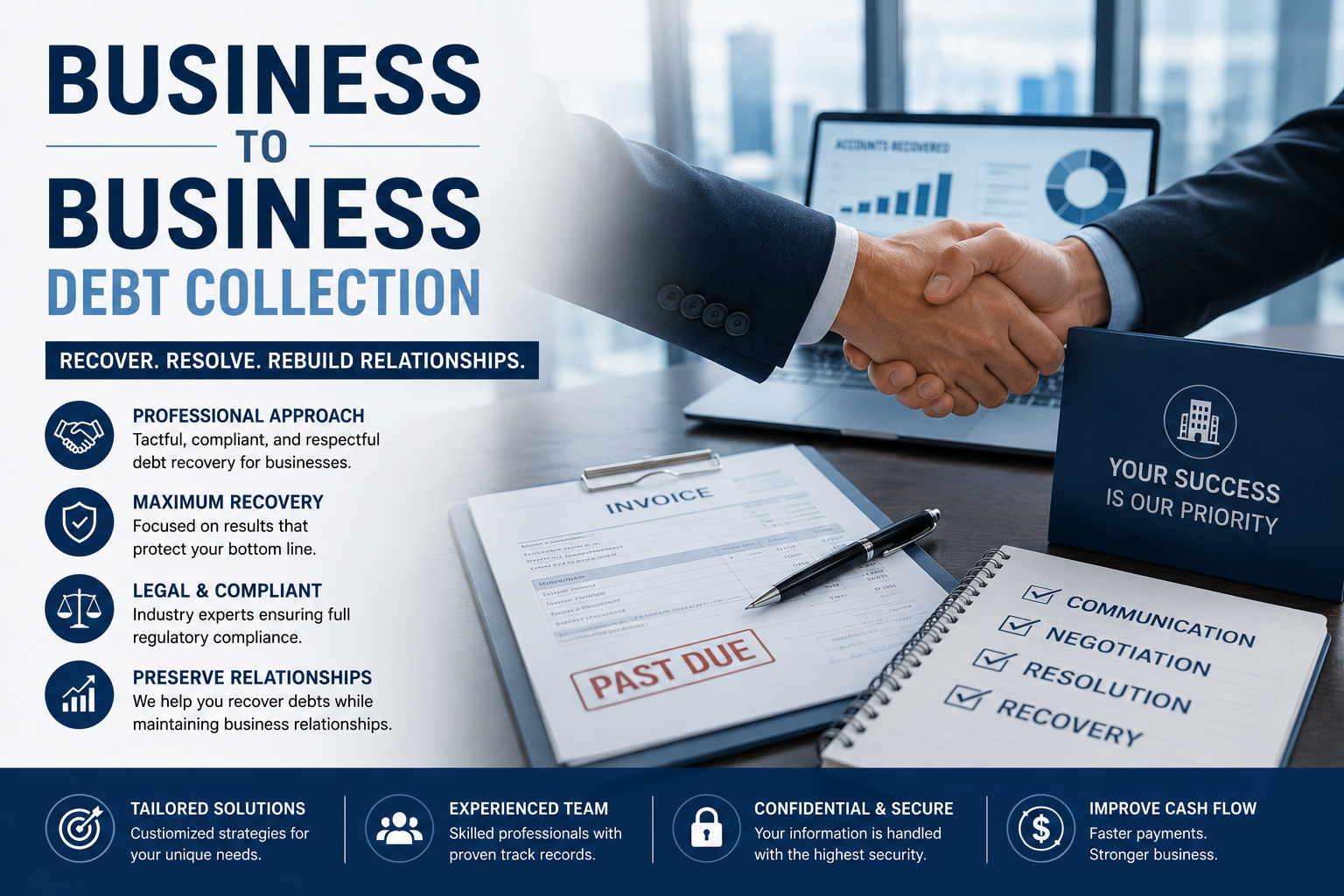
Business to Business Debt Collection: How Companies Recover Unpaid Invoices
Cash flow is one of the biggest challenges businesses face, and unpaid invoices can create serious financial pressure. When one company provides products or services to another business, payment is usually expected within an agreed period. However, late payments, overdue invoices, and unpaid commercial debts are common problems that can affect profitability, business operations, and future growth.
Business-to-business debt collection refers to the process of recovering money owed by one company to another. Unlike consumer debt collection, which involves individuals owing money for personal purchases, commercial debt collection focuses on recovering outstanding payments between businesses.
For many companies, unpaid invoices are not simply accounting issues. They represent lost revenue, disrupted cash flow, increased operational costs, and uncertainty about future financial planning. A professional business debt collection strategy helps companies recover outstanding payments while maintaining valuable business relationships whenever possible.
What Is Business to Business Debt Collection?
Business-to-business debt collection, often called B2B debt collection or commercial debt collection, is the process of recovering unpaid debts from another business. These debts usually come from transactions where one company has provided goods, services, equipment, or professional solutions and the customer has failed to make payment according to the agreed terms.
Unlike personal debts, business debts usually involve contracts, purchase orders, invoices, payment agreements, and established commercial relationships. The collection process often requires a detailed understanding of business contracts, payment obligations, industry practices, and legal requirements.
A company may need B2B debt collection services when customers:
- Fail to pay invoices on time
- Ignore payment reminders
- Dispute invoices without valid reasons
- Experience financial difficulties
- Delay payments repeatedly
- Avoid communication regarding outstanding balances
The goal of business debt collection is not only to recover money but also to protect the company’s financial health while handling the situation professionally.
Why Business Debt Collection Is Important for Companies
Unpaid business invoices can significantly impact a company’s financial stability. Even profitable businesses can experience cash flow problems when customers delay payments.
For small and medium-sized businesses especially, delayed payments can affect the ability to pay employees, suppliers, rent, operational expenses, and investment costs. A company may continue generating sales while struggling financially because the money it has earned has not actually been received.
Professional debt collection helps businesses convert unpaid invoices into recovered revenue. Instead of spending valuable time chasing payments internally, companies can use structured collection processes that improve recovery chances.
Effective B2B debt collection also allows businesses to maintain better financial forecasting. When outstanding debts are recovered efficiently, companies can make more accurate decisions about hiring, expansion, inventory, and investment.
Common Reasons Businesses Fail to Pay Their Debts
Not every unpaid invoice happens because a customer refuses to pay. Understanding the reason behind the overdue payment is important because different situations require different approaches.
Some businesses delay payments because of temporary cash flow problems. A company may have outstanding customer payments of its own and may need additional time before settling its obligations.
Other businesses may delay payment because of administrative issues. Invoices can sometimes be overlooked, sent to the wrong department, or delayed because of internal approval processes.
Invoice disputes are another common reason for unpaid business debts. A customer may claim that products were delivered incorrectly, services were incomplete, or invoice details were inaccurate.
However, some companies intentionally avoid payment despite receiving the agreed products or services. In these situations, professional collection methods become necessary to recover the outstanding amount.
The Difference Between B2B Debt Collection and Consumer Debt Collection
Business debt collection and consumer debt collection follow different processes because the relationship between the parties is different.
Consumer debt collection involves recovering money from individuals who owe money for personal transactions, such as credit cards, loans, medical bills, or personal purchases.
B2B debt collection involves recovering money between businesses. These cases often involve larger amounts, commercial agreements, invoices, contracts, and ongoing professional relationships.
Business debt collection usually requires a more strategic approach because companies often want to preserve relationships with customers, suppliers, or partners.
A professional B2B collection process focuses on finding solutions while protecting the reputation of both parties.
How the Business to Business Debt Collection Process Works
A successful commercial debt recovery process usually follows several stages.
The first stage is reviewing the outstanding debt. Before contacting the debtor, a company should verify the invoice details, payment terms, contracts, delivery records, and communication history.
This preparation helps determine whether the debt is valid and provides supporting evidence if further action becomes necessary.
The next stage involves contacting the business customer. Professional collectors usually begin with communication methods designed to encourage voluntary payment. This may include phone calls, emails, payment reminders, and formal collection notices.
The purpose of early communication is to understand the reason for non-payment and create a realistic solution. In many cases, businesses pay once the issue receives proper attention.
If informal collection attempts fail, stronger recovery methods may be considered. These may include formal demand letters, payment negotiations, legal action, or other commercial recovery options depending on the situation.
The Benefits of Hiring a Professional B2B Debt Collection Agency
Many businesses attempt to recover debts internally, but this can consume significant time and resources. Professional debt collection agencies specialize in recovering overdue payments and understand how to approach difficult situations.
One major benefit is expertise. Professional collectors understand communication strategies, negotiation techniques, and industry-specific challenges involved in commercial debt recovery.
Another advantage is improved efficiency. Instead of employees spending hours contacting overdue customers, the company can focus on its core operations while specialists handle the recovery process.
Professional collection agencies also provide a structured approach. They follow established procedures, maintain documentation, and understand when escalation is necessary.
For businesses dealing with multiple overdue accounts, outsourcing collections can create a more consistent and effective recovery system.
How Businesses Can Prevent Payment Problems
Although debt collection helps recover unpaid invoices, prevention is always better than recovery. Businesses can reduce payment problems by creating stronger credit management processes.
Clear payment terms should be established before providing products or services. Contracts and agreements should clearly explain payment deadlines, late payment consequences, and responsibilities of both parties.
Businesses should also perform credit checks when working with new customers, especially for large transactions or long-term agreements.
Accurate invoicing is another important factor. Many payment delays happen because invoices contain incorrect information, missing details, or unclear payment instructions.
Regular communication with customers can also prevent problems. Building strong relationships makes it easier to identify potential payment issues before they become serious debts.
The Importance of Professional Communication During Debt Recovery
The way a business approaches debt collection can influence whether the relationship survives.
Aggressive communication may damage valuable partnerships, while overly passive communication can reduce recovery chances.
Professional debt collection focuses on clear, respectful, and solution-oriented communication. The goal is to recover the money while maintaining professionalism.
A good collection approach recognizes that businesses can experience temporary financial challenges. However, it also protects the creditor’s right to receive payment for products or services already provided.
Legal Considerations in Business Debt Collection
Commercial debt collection must follow applicable laws and regulations. These rules vary depending on location, industry, and the relationship between the businesses involved.
Companies should maintain accurate records of contracts, invoices, payment communications, and agreements. Proper documentation strengthens the recovery process and provides evidence if legal action becomes necessary.
Businesses should also avoid practices that could damage their reputation or create legal risks. Professional collection agencies understand these requirements and help companies recover debts responsibly.
How to Choose the Right Business Debt Collection Agency
Choosing the right collection partner is important because the agency will represent your company during communication with customers.
A reliable B2B debt collection agency should have experience handling commercial accounts, understand your industry, and use professional communication methods.
Businesses should consider factors such as:
- Experience with similar commercial debts
- Recovery methods used
- Reputation and professionalism
- Communication process
- Reporting systems
- Legal knowledge
- Fee structure
The right agency should act as an extension of your business, protect your reputation, and improve recovery results.
The Role of Technology in Modern Debt Collection
Technology has transformed the way businesses manage debt recovery. Modern collection systems allow companies to track invoices, automate reminders, analyze payment behavior, and improve communication.
Data analytics can help businesses identify customers who are more likely to delay payments. Automated systems can also ensure that overdue invoices receive timely attention.
However, technology should support human communication rather than replace it completely. Successful commercial debt recovery often requires negotiation, understanding, and relationship management.
Final Thoughts on Business to Business Debt Collection
Business-to-business debt collection plays an important role in protecting company cash flow and financial stability. Unpaid invoices can create significant challenges, but a structured recovery process can help businesses recover money while maintaining professional relationships.
The most effective approach combines prevention, clear payment processes, professional communication, and strategic collection methods.
Businesses should not wait until overdue payments become serious financial problems. By establishing strong credit management practices and using professional debt recovery support when needed, companies can protect their revenue and continue growing with confidence.
A successful B2B debt collection strategy is not only about recovering money. It is about creating a healthier financial foundation for long-term business success.