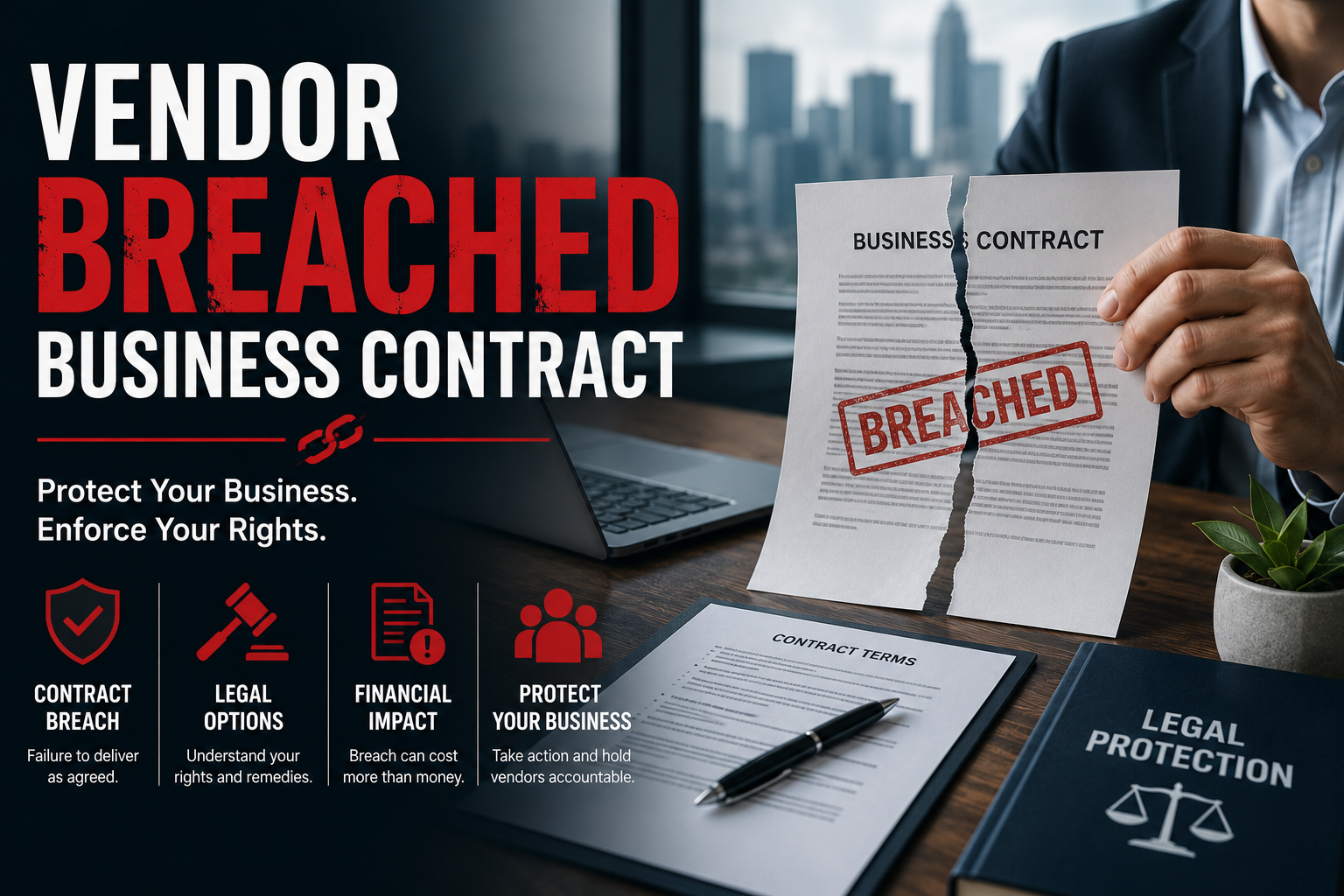
A business relies on vendors to provide products, services, materials, or expertise that keep daily operations running smoothly. Whether you work with a supplier, software provider, contractor, manufacturer, or service company, a written contract helps both parties understand their responsibilities and expectations.
However, problems can occur when a vendor fails to follow the terms of the agreement. A vendor may deliver poor-quality products, fail to meet deadlines, stop providing services, charge unexpected costs, or refuse to complete agreed work. When this happens, the vendor may have breached the business contract.
A vendor contract breach can create serious consequences for a company, including financial losses, project delays, unhappy customers, and disruption to normal operations. Understanding what a breach means, what steps you should take, and what legal options may be available can help protect your business interests.
What Does It Mean When a Vendor Breaches a Business Contract?
A vendor breaches a business contract when they fail to perform their obligations according to the terms agreed upon in a legally binding agreement. A contract creates responsibilities for both sides, and each party is expected to fulfill those responsibilities within the agreed timeframe and standards.
For example, if a company hires a vendor to provide equipment by a specific date and the vendor fails to deliver without a valid reason, this may be considered a breach of contract. Similarly, if a vendor provides services that do not meet the quality standards mentioned in the agreement, the business may have grounds to claim that the contract has been violated.
Not every disagreement between a business and a vendor automatically becomes a legal breach. The situation depends on the contract language, the seriousness of the vendor’s failure, and whether the breach caused actual harm to the business.
Common Types of Vendor Contract Breaches
Vendor breaches can happen in different ways depending on the nature of the business relationship. Some breaches involve simple delays, while others can significantly affect a company’s ability to operate.
Failure to Deliver Products or Services as Promised
One of the most common vendor contract breaches happens when a vendor does not provide the promised products or services. Businesses often depend on vendors for essential supplies, technology, maintenance, logistics, or professional services.
If a vendor fails to deliver what was agreed upon, the business may need to find another provider quickly, often at a higher cost. This can create unexpected expenses and interrupt normal business activities.
For example, a restaurant that depends on a food supplier may face serious problems if the supplier suddenly fails to deliver essential ingredients according to the agreed schedule.
Late Delivery or Failure to Meet Deadlines
Many business contracts include specific deadlines because timing is an important part of the agreement. A vendor that repeatedly misses deadlines may cause delays throughout a project or supply chain.
A delayed vendor delivery may affect customer orders, product launches, construction schedules, or service commitments. If meeting the deadline was an important requirement of the contract, these delays could potentially represent a breach.
Providing Defective Products or Poor-Quality Services
A vendor may also breach a contract by providing products or services that do not meet agreed requirements.
For example, a business may purchase customized equipment with specific technical standards. If the vendor delivers equipment that does not function properly or fails to match the agreed specifications, the business may experience financial losses while trying to repair or replace the defective items.
Quality expectations should always be clearly defined in vendor agreements to reduce disputes.
Violating Contract Terms or Changing Conditions Without Approval
A vendor usually cannot change important contract terms without the other party’s agreement. Problems may arise when a vendor increases prices unexpectedly, reduces service levels, changes delivery conditions, or fails to follow confidentiality requirements.
When a vendor ignores important contract provisions, the business may have the right to seek corrective action or pursue legal remedies.
What Should You Do If a Vendor Breaches Your Business Contract?
When a vendor fails to meet contractual obligations, businesses should avoid making rushed decisions. Taking organized steps can help protect your position and improve the chance of resolving the issue successfully.
Review the Contract Carefully
The first step is to review the vendor agreement and understand exactly what both parties agreed to do. Pay close attention to the vendor’s responsibilities, delivery requirements, payment terms, quality expectations, termination clauses, and dispute resolution process.
Many contract disputes happen because one party misunderstands the agreement or assumes certain obligations existed when they were not clearly included. A careful review helps determine whether the vendor actually violated the contract.
Gather Evidence of the Breach
Documentation plays an important role in any contract dispute. Keep records that show what the vendor promised and how they failed to meet those obligations.
Important evidence may include the signed contract, emails, invoices, payment records, delivery confirmations, photographs, reports, and any communication with the vendor about the problem.
Strong documentation can help demonstrate the timeline of events and show how the breach affected your business.
Communicate With the Vendor
Before taking legal action, many businesses attempt to resolve the issue directly with the vendor. A professional conversation or written notice may help both parties understand the problem and find a solution.
Explain what part of the agreement was not fulfilled, how it affected your business, and what action you expect from the vendor. Keeping communication professional and documented can be helpful if the dispute later becomes a legal matter.
Send a Formal Breach Notice
If informal discussions do not solve the problem, a formal breach notice may be necessary. This notice informs the vendor that they have failed to meet their contractual obligations and gives them an opportunity to correct the issue.
A breach notice may include details about the contract, the specific violation, the impact on the business, and the steps required to resolve the situation.
Some contracts require a formal notice before a business can take further legal action, so it is important to follow the agreement’s procedures.
Can You Sue a Vendor for Breaching a Business Contract?
A business may be able to take legal action against a vendor that breaches a contract. However, the ability to successfully pursue a claim depends on several factors, including whether a valid contract existed, whether the vendor actually breached the agreement, and whether the business suffered measurable damages.
In many cases, businesses first attempt negotiation or alternative dispute resolution because it can be faster and less expensive than litigation. However, when a vendor refuses to cooperate, or the financial impact is significant, legal action may become necessary.
A business contract lawyer can review the agreement, explain available options, and help determine the best approach based on the circumstances.
What Compensation Can a Business Recover After a Vendor Breach?
The type of compensation available after a vendor breach depends on the contract terms and the losses suffered by the business.
A company may seek compensation for direct financial losses caused by the breach. For example, if a vendor fails to provide agreed services and the business must hire another company at a higher price, those additional costs may become part of a damages claim.
Businesses may also seek compensation for other losses, such as costs related to correcting defective work, replacing products, or dealing with delays caused by the vendor’s failure.
Some contracts include specific penalty clauses or agreed damages that explain what happens when one party fails to meet its obligations.
How Can Businesses Prevent Vendor Contract Breaches?
Preventing contract problems starts before signing an agreement. A carefully prepared vendor contract can reduce misunderstandings and provide clear protection if problems occur.
Businesses should make sure contracts clearly explain what the vendor must provide, expected quality standards, payment conditions, deadlines, and procedures for handling disputes.
It is also important to choose vendors carefully by reviewing their experience, reputation, previous performance, and ability to meet business requirements. Regular communication and performance reviews can help identify potential issues before they become serious contract disputes.
When Should You Contact a Business Contract Lawyer?
Not every vendor disagreement requires legal action, but professional advice can be valuable when the situation becomes complicated or financially significant.
You may want to consult a business contract lawyer if the vendor denies responsibility, refuses to correct the problem, causes substantial financial damage, or threatens legal action against your company.
A lawyer can help evaluate your contract, communicate with the vendor on your behalf, negotiate a resolution, and protect your business rights throughout the dispute.
Frequently Asked Questions
What is considered a vendor breach of contract?
A vendor breach of contract occurs when a vendor fails to fulfill a responsibility required under a business agreement, such as failing to deliver products, providing poor-quality services, or violating important contract terms.
Can a vendor breach a contract by delivering late?
Yes. If the contract includes deadlines and timely performance is an important part of the agreement, repeated delays may be considered a breach.
What should I do first if my vendor breaches a contract?
The first step is to review the contract and collect evidence showing what the vendor agreed to provide and how they failed to meet those obligations.
Can I terminate a vendor agreement after a breach?
It depends on the contract terms and the seriousness of the breach. Some agreements allow termination after certain violations or if the vendor fails to fix the problem within a reasonable period.
Do I need a lawyer for a vendor contract dispute?
A lawyer is not always required, but legal guidance can be helpful when the dispute involves significant financial losses, complex contracts, or unsuccessful negotiations.
Conclusion
A vendor that breaches a business contract can create unexpected challenges for any company. Delayed services, defective products, and failure to meet contractual obligations can affect finances, operations, and customer relationships.
The best response is to carefully review the contract, document the breach, communicate with the vendor, and understand your available options. Taking a structured approach can help resolve the dispute and protect your business from further damage.
When a vendor breach involves significant losses or complex legal issues, working with a business contract lawyer can help ensure your company’s rights and interests are properly protected.