
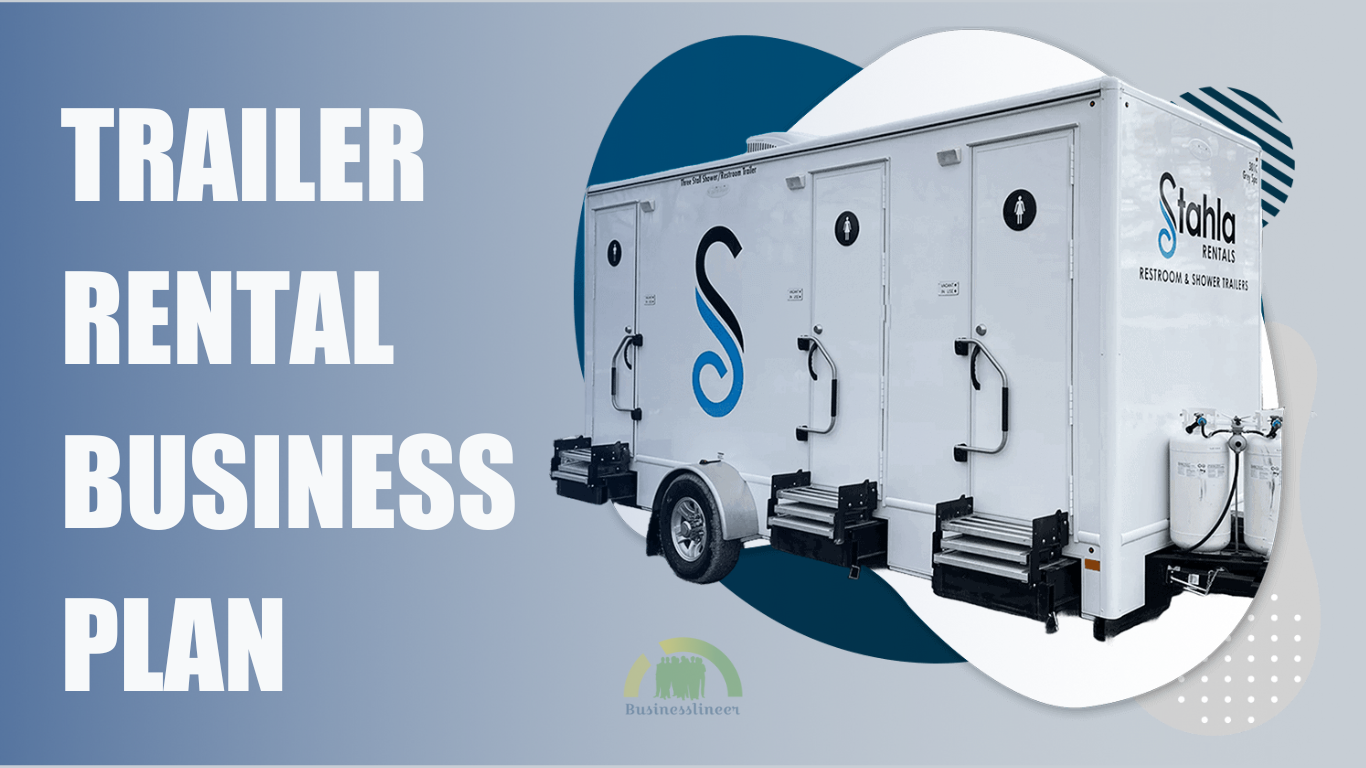
As an entrepreneur looking to bolster your income around a cash-producing asset, starting a trailer hire business may be the profitable opportunity you have been looking for. Unlike most businesses that rely on repeat unit sales, a trailer rental business generates revenue by re-renting the same equipment to multiple customers over time. With a well-maintained trailer generating ongoing revenue for years, it’s a highly attractive, scalable small-business model.
But of course, riding this wave isn’t just about buying a handful of trailers, then sitting back and watching the feathers fly. To run a successful trailer rental business, you need to know how much freight you will move, what types of equipment are best suited, make corrective assumptions about the expenses incurred, and craft an effective marketing strategy
Investing in a comprehensive trailer rental business plan helps you determine whether this business is ideal for your town or city, the capital required to start, who your likely customers are, and the steps to create a solid revenue flow.
How the Trailer Rental Business Model Works
How does a trailer rental business work? Customers pay a rental fee depending on how long the product is required for, daily, weekly, or monthly rentals.
This business model works because many people need a trailer now and then but don’t want the financial drain of ownership. Buying a trailer is a hefty upfront investment, and owners are responsible for maintenance, storage, registration, and repairs even when the trailer gathers dust.
Rental resolves this dilemma by making the machine available to customers only when they require it.
Customer Base for a Trailer Rental Company
Homeowners can rent trailers to move furniture, do home improvement projects, or transport large commodities. Contractors often need trailers for job-site transport or hauling specific construction equipment, landscaping materials, etc. Farmers, event organizers, and small businesses with short-term needs may also rent trailers.
Because trailers serve different industries, a well-planned rental business can provide multiple income streams.
Benefits of Starting a Trailer Rental Business
Demand for rental equipment keeps growing; businesses and individuals alike are becoming increasingly confident renting instead of buying costly equipment they use infrequently.
This is advantageous for a trailer rental business compared to many others you may consider starting. JIT is simply the act of implementation, because equipment itself is a long-term (non-disposable) investment; it does not deplete after one transaction. A good trailer, if looked after, will earn you revenue for a long time.
The second benefit is that you can scale the business in small steps. It does not mean you need a huge fleet from day one. Most of the successful rental companies start with only a few hand-picked trailers and expand once they operate at full capacity.
Management is also simpler than in more complicated industries. Primarily, you need a platform for bookings, payments, inspections, maintenance, and customer communication.
Still, you may realize this business has more challenges than what meets the eye. Commercial trailers need maintenance, insurance can be expensive, and unused equipment creates no income. That’s why you need a comprehensive business plan before investing.
Research Your Local Trailer Rental Market
The following are some of the major components of a trailer rental business plan: Market analysis. In a good leasing business, you must first understand whether people in your area really need trailer rentals before you invest in equipment.
Location makes all the difference in trailer demand. For example, a rural location might need more farming and utility trailers, while a growing city may need just as many for contractors, homeowners, and moving customers.
First, study your potential clients and competitors. Research local trailer rental companies: what trailers they rent out, what they charge for rentals, and what customers are saying.
Testimonies received can be a helpful indicator. Often, reviews show that chairs aren’t available, advice isn’t communicated, they use old equipment to follow these GPS-heavy contracts, and sometimes the problem is as simple as a buggy booking. Such weaknesses can become strengths or opportunities for your enterprise.
If your competitors ONLY have commercial trailers that are on the expensive side, you could target homeowners and small businesses with low-cost, durable trailers.
Market Research — The goal of market research is not simply a copy of businesses already laying their hands on market graphs. It’s about finding where you can deliver more value.
Choose the Right Trailers for Your Business
One of the biggest decisions you will ever encounter in your business is choosing the right trailer inventory. The biggest blunder new business owners make is either buying a wide range of trailer types or using whatever is available at the time because they don’t fully understand what customers need.
Your initial trailers should align with the demand of your desired market.
Utility trailers are a common first choice because of their versatility. Customers utilize plastic crates for landscaping projects, home improvements, moving items, and a variety of transportation needs. They are versatile enough to work for almost every customer.
The next best option is an enclosed trailer, which protects items from the weather and theft. These battery-powered stake trailers suit contractors, delivery companies, moving corporations, and people transporting tools and valuable assets.
In regions with active construction and landscaping industries, dump trailers can appeal to many contractors. That helps customers to easily haul and offload materials like dirt, gravel, debris, and other heavy loads.
Equipment trailers are good for customers looking to transport machinery, vehicles, or specialized equipment (for example). Commercial customers also tend to gravitate toward these trailers, as they can provide clarity for repeat rentals.
Ideally, start with the most requested trailers in your area and build your inventory from there.
Plan Your Startup Costs
The main reason for a trailer rental business plan is that it clarifies your financial needs before you start.
You will usually invest most of your money in buying trailers. The cost depends on how much you spend on new or used equipment and what kind of trailers you buy.
New trailers usually cost more but offer better reliability and fewer early repair expenses. Second-hand trailers can save considerable startup cash for a new business; however, they need close inspection so you don’t end up with equipment that has hidden problems.
Beyond the trailer purchase, you also need to plan for registration and insurance, trailer storage, a functional website with hosting, and possibly advertising or local marketing, plus maintenance and credit card processing fees.
Many entrepreneurs underestimate ongoing costs. A trailer rental company needs to do inspections, repairs, tire changes, cleaning, and safety checks. Your planning for these costs must account for them.
Your business plan should be realistic about startup costs and the monthly costs of running your business.
Determine Your Rental Pricing Strategy
Pricing: This is one of the most critical factors that influence profitability. Your prices must appeal to prospective customers while ensuring your business brings in enough income to cover expenses.
Most trailer rental companies offer daily, weekly, and monthly rentals. Short-term rentals can generate higher daily revenue, but long-term rentals provide more stable income.
Pricing should vary based on how much your trailer costs to buy, what other units charge in your area, and how much upkeep those trailers need compared with regular dumpsters similar to the one you’re trying to replace.
Do NOT decide to compete on price – with the lowest prices. A low-price strategy reduces profitability and makes it hard to maintain equipment quality.
So, offer a high-quality trailer experience with easy booking and clear pricing; provide great customer service rather than trying to push something. When they are confident they will receive clean, reliable equipment, many customers are willing to pay a bit more.
Marketing Plan for a Trailer Rental Business
You can have the best gear in the world, but it will not make you any money if no one knows where to find your business. A strong marketing strategy, even for a trailer rental business, is essential to business planning.
Many potential customers go online and search before choosing a rental business. A professional website that explains your trailer options, rental process, service area, and pricing helps build trust.
Especially for local rental businesses, search engine optimization is highly effective. People search for things like “trailer rental near me” or “utility trailer rental in [city].” By creating helpful website content centered on these topics, you have a good chance of attracting potential customers through search engines.
A strong local reputation is another important factor. Good customer reviews can impact purchase decisions and lend character to a brand.
Partnerships can also generate reliable business. Contractors, landscapers, moving companies, and local businesses also often return to use your service.
Online presence is only one part of the most effective marketing strategy; you also need to be well connected in your community.
Manage Daily Operations Effectively
Properly planning your operations is key to success for any trailer rental business. To minimize equipment risk and maximize customer satisfaction, follow a structured process for every rental.
Before renting a trailer, inspect it thoroughly and note any existing damage. Check it again when the customer returns it to identify maintenance issues quickly.
A well-defined rental agreement is also a must. Include details on payment terms, rental lengths, and customer responsibilities, as well as information on damages and returns.
If your business gains traction, rental management software offers a free, comprehensive solution that can easily categorize bookings, customer details, payments, and maintenance calendars.
Good operations create trust. Happy renters increase your customer retention, which leads to referrals.
Protect Your Investment With Insurance and Maintenance
Because buying trailers can be expensive, you should secure them. Insurance needs vary by location and business structure, but the right coverage protects you against unforeseen losses.
Regular maintenance is equally important. An unmaintained trailer can lead to safety issues and damage your reputation by increasing repair costs.
Emergency repairs are usually more expensive than preventive maintenance. Inspections help you keep your tires, brakes, lights, frames, and other equipment components in safe, customer-ready condition.
A trailer in the repair shop for extended periods is not exactly a money-making entity, meaning maintenance has a direct influence on your bottom line.
Common Mistakes New Trailer Rental Businesses Make
Our training focuses almost exclusively on equipment; however, we neglect the two most important pillars of starting a new business: planning and Customer acquisition.
One mistake we make is buying more trailers sooner than we should. More equipment doesn’t mean higher profit. In that case, and depending on how low demand is, unused trailers become costly assets that earn no revenue.
Not Emphasizing Customer Care: Trust is integral to rental businesses. Customers want tidy equipment, transparent communication, and simple lease processes.
Many other business owners don’t document their financial performance well. This helps you decide what to do—you know which trailers generate the most revenue and which expenses reduce profits.
Growing slowly is generally less risky than growing too quickly, so you can make decisions based on real numbers and data.
Trailer Rental Business Plan FAQs
How Much Money Can a Trailer Rental Make?
Rental revenue comes from using the equipment as much as possible and keeping operating expenses low. Profit depends heavily on rental demand, rental price, maintenance costs, and how well you manage the business.
How Many Trailers Do I Need to Start?
The best starting number depends on your budget and what the local market requires. Many groups start with a few trucks and expand as they build a regular customer base.
Do I Need a Large Space to Start a Trailer Rental Business?
Not necessarily. Others start with smaller spaces, etc. However, you will need a place to store trailers and comply with local codes safely.
What Type of Trailer Should I Rent?
The best trailer depends on your customers and what you need in your market area. Utility trailers are generally a good fit for starter kits, since they have lots of use cases, but demand can vary by location.
How Do I Get Repeat Business?
You can attract repeat customers by building an online presence, gathering reviews, partnering with local businesses, and providing excellent service.
From Zero to a Successful Trailer Rental Company
Owning equipment does not build a successful trailer rental business – careful decisions do. Successful entrepreneurs understand their customers, invest wisely, maintain their equipment, and provide a dependable rental experience.
Before spending money on renting trailers, you need a trailer rental company plan because it eliminates common errors. The right equipment, market knowledge, and customer satisfaction are all it takes to grow a small rental business into the most valuable long-term investment you can own.
This lets you expand the fleet as demand increases gradually, serve larger customer groups, and create additional services that generate extra income. A trailer rental business is undoubtedly a great opportunity to start and sustain if well planned and executed.
