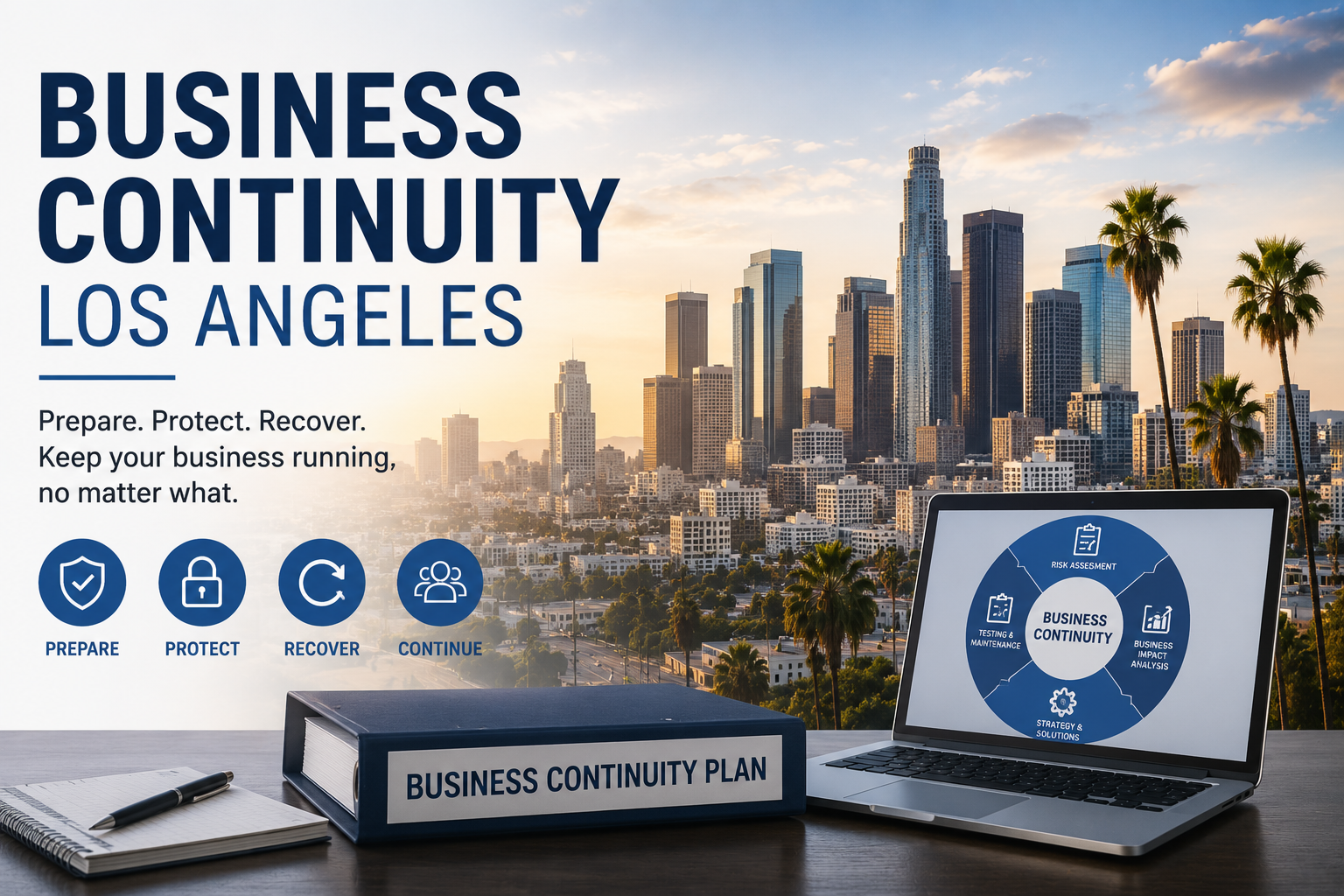
Businesses in Los Angeles operate in one of the most dynamic and competitive business environments in the United States. From technology companies and healthcare organizations to financial services, retail businesses, and professional service providers, companies across the region depend on stable operations to serve customers and maintain growth.
However, unexpected disruptions can happen at any time. Natural disasters, cyberattacks, power failures, supply chain interruptions, equipment failures, and other emergencies can significantly affect business operations. Without proper preparation, even a short interruption can lead to financial losses, customer dissatisfaction, and long-term damage to a company’s reputation.
This is why business continuity Los Angeles has become an important consideration for organizations of all sizes. Business continuity planning helps companies prepare for unexpected events, maintain essential operations, protect valuable resources, and recover as quickly as possible.
A strong business continuity strategy does not focus only on recovery after a disaster. It focuses on creating a resilient organization that can adapt, respond, and continue operating under difficult circumstances.
What Is Business Continuity?
Business continuity refers to the process of planning and preparing how a company will continue its critical operations during and after an unexpected disruption.
A business continuity plan identifies potential risks, evaluates their possible impact, and creates strategies to keep essential business functions running. The goal is to reduce downtime and ensure that employees, customers, partners, and stakeholders can continue receiving necessary services.
Many people confuse business continuity with disaster recovery. Although they are closely related, they serve different purposes.
Disaster recovery mainly focuses on restoring technology systems, applications, and data after an incident. Business continuity is broader because it includes people, processes, facilities, communication strategies, technology, and overall business operations.
For example, if a company experiences a major system failure, disaster recovery may focus on restoring servers and recovering data. Business continuity planning considers how employees will continue working, how customers will be supported, and how essential services will remain available during the recovery process.
Why Business Continuity Planning Is Important in Los Angeles
Los Angeles is a major economic center with millions of businesses operating across different industries. While the region offers significant opportunities, companies also face unique risks that can affect daily operations.
One of the biggest challenges in Los Angeles is the possibility of natural disasters. Earthquakes are a well-known risk in Southern California, and businesses must consider how they would operate after a major event. Wildfires, extreme weather conditions, and public infrastructure issues can also create operational challenges.
In addition to natural risks, Los Angeles businesses face modern threats such as cybersecurity incidents, ransomware attacks, data breaches, and technology failures. As companies become more dependent on digital systems, protecting business information and maintaining technology availability has become increasingly important.
A business continuity plan gives organizations a structured approach to handle these challenges instead of reacting without preparation.
Common Business Risks Faced by Los Angeles Companies
Natural Disasters and Environmental Risks
Businesses in Los Angeles need to consider how natural events could affect their operations. Earthquakes, wildfires, and other environmental emergencies can impact offices, employees, transportation networks, and supply chains.
A company without a continuity plan may struggle to communicate with employees, access important information, or continue serving customers after a major disruption.
A properly designed business continuity strategy helps organizations prepare alternative working arrangements, emergency communication methods, and recovery procedures.
Cybersecurity Threats and Data Loss
Cybersecurity has become one of the most serious risks for modern businesses. A cyberattack can prevent employees from accessing important systems, expose sensitive information, or interrupt customer services.
Business continuity planning helps companies prepare for cybersecurity incidents by establishing backup procedures, data protection strategies, and response processes.
Organizations that regularly test their recovery procedures are better prepared to minimize the impact of cyber-related disruptions.
Power Outages and Technology Failures
Many businesses depend heavily on technology infrastructure. Internet failures, software problems, hardware breakdowns, and power interruptions can quickly affect productivity.
A business continuity plan helps companies identify critical technology requirements and develop solutions that enable operations to continue during technical issues.
Key Elements of a Business Continuity Plan
A successful business continuity plan includes several important components that work together to protect an organization.
Business Impact Analysis
A business impact analysis is one of the first steps in business continuity planning. It helps organizations identify their most important business functions and understand how disruptions could affect them.
During this process, companies evaluate which operations must continue, what resources are required, and how quickly different activities need to be restored.
Understanding these priorities allows businesses to focus their recovery efforts where they matter most.
Risk Assessment
Risk assessment involves identifying possible threats and evaluating their likelihood and potential impact.
A Los Angeles business may face different risks depending on its industry, location, size, and technology requirements. A financial company may prioritize cybersecurity, while a manufacturing company may focus on supply chain disruptions.
A detailed risk assessment helps create a more effective continuity strategy.
Emergency Communication Planning
Clear communication is essential during a crisis. Employees, customers, suppliers, and partners need accurate information about what is happening and what actions they should take.
Business continuity planning includes communication procedures that define how information will be shared during emergencies.
This prevents confusion and helps maintain trust during difficult situations.
Data Backup and Recovery Strategy
Data is one of the most valuable assets for modern businesses. Losing important information can create serious operational and financial problems.
A business continuity strategy should include reliable backup systems and recovery procedures to ensure important data remains protected.
Regular testing is important because a backup system is only valuable if information can actually be recovered when needed.
Benefits of Business Continuity Consulting in Los Angeles
Many businesses choose professional business continuity consulting because developing an effective plan requires specialized knowledge and experience.
A business continuity consultant helps organizations analyze risks, identify weaknesses, and develop strategies that align with their specific needs.
One major benefit of consulting is improved preparedness. Instead of waiting until a disruption occurs, companies can proactively identify problems and create solutions before they become serious issues.
Business continuity consulting can also improve operational resilience. A resilient business can adapt faster, maintain important services, and recover more effectively after unexpected events.
For small and medium-sized businesses in Los Angeles, professional guidance can be especially valuable because they may not have dedicated internal teams focused on risk management.
Industries That Need Business Continuity Planning in Los Angeles
Almost every industry can benefit from business continuity planning, but some sectors require stronger preparation because interruptions can have significant consequences.
Healthcare organizations need continuity plans to maintain essential services and protect patient information.
Financial companies require strong continuity strategies because customers depend on reliable access to financial services.
Technology companies must protect digital systems, applications, and sensitive data.
Retail and hospitality businesses need continuity plans to maintain customer service and manage supply chain challenges.
Professional service companies also benefit because their operations often depend on employees, communication systems, and digital information.
How to Create an Effective Business Continuity Strategy
Creating a business continuity strategy begins with understanding the organization’s unique risks and operational requirements.
The first step is to identify critical business activities and determine which resources are necessary to keep them running.
The next step is developing response procedures that explain what employees should do during different types of disruptions.
After creating the plan, businesses should regularly test and update it. A business continuity plan should not be considered a one-time document. It should evolve as the company changes, technology develops, and new risks emerge.
Regular reviews ensure that the plan remains practical and effective.
Business Continuity vs Disaster Recovery
Although business continuity and disaster recovery are connected, they address different areas of organizational resilience.
Business continuity focuses on maintaining business operations during disruptions. It considers employees, processes, communication, facilities, and technology.
Disaster recovery focuses mainly on restoring IT systems, applications, and data after an incident.
A strong organization needs both. Business continuity ensures that the company can continue operating, while disaster recovery helps restore important systems.
Choosing a Business Continuity Consultant in Los Angeles
When selecting a business continuity consultant, companies should look for experience, industry knowledge, and a practical approach.
A good consultant should understand local risks, business operations, technology requirements, and emergency management principles.
The right consulting partner will not simply create a document. They will help develop a realistic strategy that employees can follow during a real disruption.
Companies should also choose consultants who emphasize testing and continuous improvement because preparedness requires ongoing attention.
The Future of Business Continuity Planning
Business continuity planning continues to evolve as businesses face new challenges. Technology changes, cybersecurity threats increase, and organizations become more dependent on digital operations.
Modern business continuity strategies increasingly include cloud technology, remote work solutions, automated backups, cybersecurity planning, and data protection measures.
Companies that invest in resilience today are better positioned to handle uncertainty in the future.
For businesses in Los Angeles, having a strong continuity strategy is no longer just a precaution. It is an important part of responsible business management.
Frequently Asked Questions About Business Continuity Los Angeles
What is business continuity planning?
Business continuity planning is the process of preparing a company to continue essential operations during and after unexpected disruptions.
Why do Los Angeles businesses need business continuity plans?
Los Angeles businesses face risks such as earthquakes, wildfires, cybersecurity threats, technology failures, and operational disruptions. A continuity plan helps reduce downtime and improve recovery.
What is the difference between business continuity and disaster recovery?
Business continuity focuses on maintaining overall operations, while disaster recovery focuses mainly on restoring technology systems and data.
Can small businesses benefit from business continuity planning?
Yes. Small businesses often have fewer resources to recover after disruptions, making preparation especially valuable.
How often should a business continuity plan be updated?
A business continuity plan should be reviewed regularly and updated whenever there are major changes in business operations, technology, employees, or risks.
Conclusion
Business continuity Los Angeles is an essential strategy for organizations that want to protect their operations and remain prepared for unexpected challenges.
From natural disasters and cybersecurity threats to technology failures and operational disruptions, businesses must be ready to respond quickly and effectively.
A well-designed business continuity plan helps companies reduce downtime, protect important resources, maintain customer trust, and build long-term resilience.
For businesses operating in Los Angeles, investing in continuity planning is not only about recovering from problems. It is about creating a stronger, more adaptable organization that can continue moving forward even during uncertain situations.