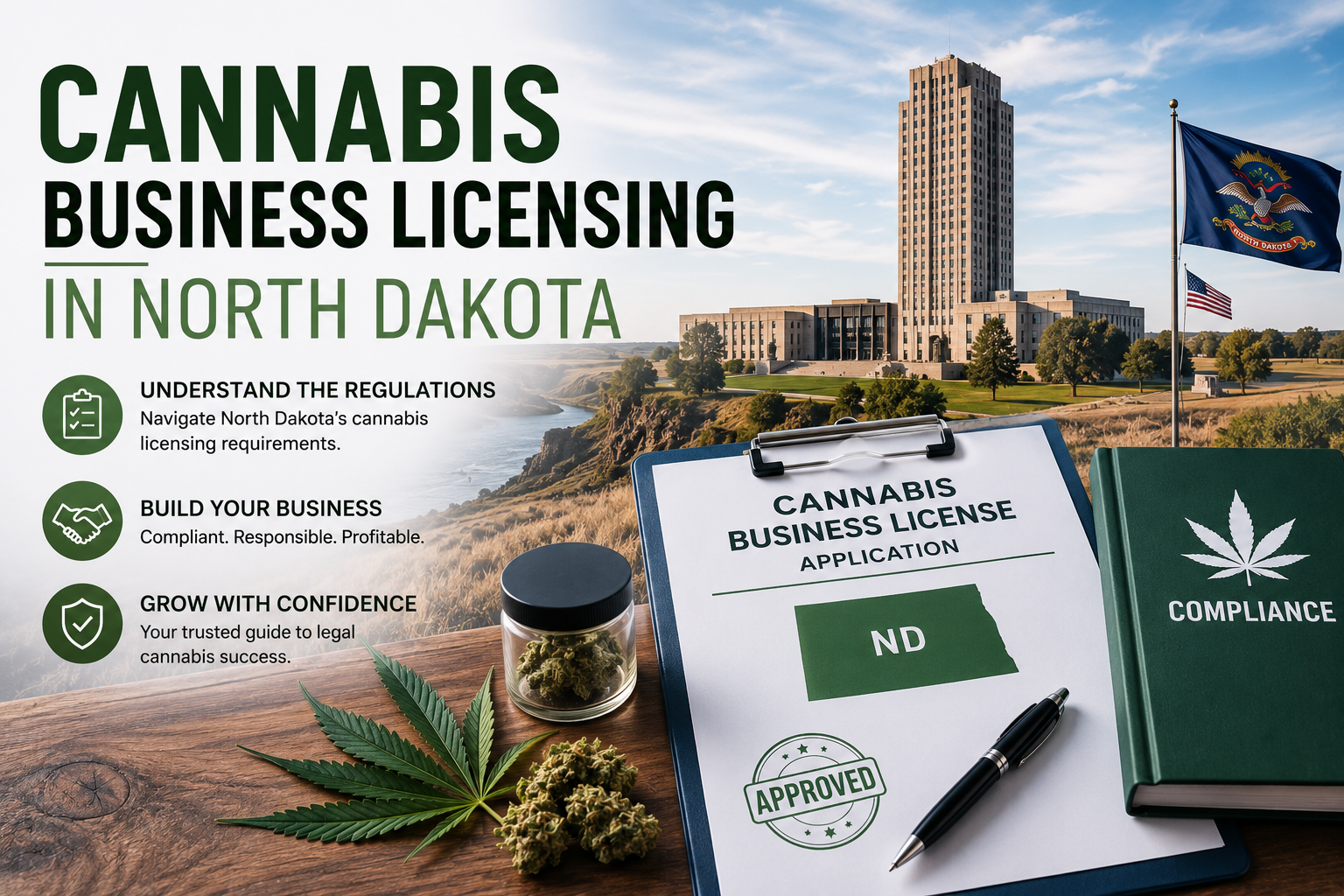
The cannabis industry has become one of the fastest-changing business sectors in the United States. As more states develop regulated cannabis programs, entrepreneurs are exploring opportunities in cultivation, manufacturing, retail, and related services. However, entering the cannabis industry requires careful planning because cannabis businesses operate under strict legal and regulatory requirements.
For entrepreneurs researching cannabis business licensing in North Dakota, understanding the state’s regulatory framework is essential before investing time and resources. North Dakota has established a regulated medical cannabis program that allows approved businesses to participate in the production and distribution of medical cannabis products under state supervision.
Unlike traditional businesses, cannabis companies must meet additional requirements related to licensing, security, product safety, inventory tracking, and operational compliance. A successful cannabis business is built not only on market opportunity but also on a strong understanding of regulations and responsible business practices.
This guide explains the cannabis licensing process in North Dakota, the types of cannabis businesses allowed, important requirements, challenges, and strategic considerations for entrepreneurs interested in this growing industry.
Understanding Cannabis Regulations in North Dakota
North Dakota follows a regulated approach to cannabis through its medical cannabis program. The state allows qualified patients with approved medical conditions to access medical cannabis products through licensed businesses.
The cannabis industry in North Dakota operates differently from states that have established recreational cannabis markets. Businesses must understand which activities are legally permitted and what requirements apply before beginning operations.
The regulatory system is designed to protect patients, maintain product safety, prevent unauthorized distribution, and ensure that cannabis businesses operate responsibly.
For anyone considering entering the cannabis market, understanding the difference between medical cannabis regulations and general business regulations is an important first step.
North Dakota’s Medical Cannabis Program
North Dakota’s medical cannabis program provides a legal framework for producing and distributing cannabis products for registered medical cannabis patients.
Under this system, businesses that participate in the cannabis supply chain must obtain approval from state regulators and adhere to specific operating standards.
The program focuses on controlled access, product quality, security measures, and accurate tracking of cannabis products from production to sale.
Because the industry serves medical patients, businesses must maintain a high level of professionalism and compliance.
Difference Between Medical Cannabis and Recreational Cannabis Markets
One important consideration for entrepreneurs is understanding that medical cannabis and recreational cannabis markets operate differently.
A medical cannabis market is designed to provide cannabis products to qualified patients through an approved healthcare-related system. Businesses must follow patient access rules and medical program requirements.
A recreational cannabis market allows broader adult consumer access and typically involves different licensing structures and regulations.
Entrepreneurs researching cannabis business licensing in North Dakota should focus on the state’s current medical cannabis framework and monitor future regulatory developments.
What Is a Cannabis Business License?
A cannabis business license is official authorization that allows a company to legally participate in cannabis-related activities.
Because cannabis is a highly regulated industry, businesses cannot legally cultivate, manufacture, or distribute cannabis products without approval from the appropriate regulatory authority.
A license confirms that a business has met required standards involving ownership, operations, security, and compliance.
Why Cannabis Businesses Need State Approval
State approval helps ensure that cannabis businesses operate safely and responsibly.
Regulators review businesses to ensure they have appropriate facilities, qualified owners, security procedures, and systems in place to protect consumers.
Licensing also allows government agencies to monitor the industry and maintain accountability.
For business owners, obtaining a license provides legal permission to operate and creates a foundation for building a legitimate cannabis company.
How Licensing Helps Regulate the Industry
A regulated licensing system creates consistency throughout the cannabis industry.
Without proper oversight, businesses could operate without quality controls or safety procedures. Licensing requirements help establish standards for:
- Product testing
- Facility security
- Inventory management
- Recordkeeping
- Employee responsibilities
These requirements protect consumers while creating a more professional business environment.
Types of Cannabis Business Licenses in North Dakota
The cannabis industry includes different types of businesses, each with specific responsibilities within the supply chain.
Understanding the available license categories helps entrepreneurs determine which business model fits their goals.
Medical Cannabis Manufacturing Facilities
Medical cannabis manufacturing facilities are responsible for producing cannabis products for qualified patients.
These businesses must manage production processes carefully to maintain product quality and meet regulatory standards.
Manufacturers typically handle activities such as preparing cannabis products, maintaining production records, managing inventory, and ensuring products meet testing requirements.
Operating a manufacturing facility requires significant planning because businesses must invest in equipment, security systems, compliance processes, and trained employees.
Medical Cannabis Dispensaries
Medical cannabis dispensaries provide approved cannabis products directly to registered patients.
Dispensaries play an important role because they connect patients with regulated cannabis products while ensuring compliance with state requirements.
A successful dispensary requires more than a retail location. Businesses must maintain accurate records, protect products, train employees, and provide responsible customer service.
Because dispensaries interact directly with patients, education and professionalism are important parts of daily operations.
Cannabis Cultivation and Production Operations
Cannabis cultivation involves growing cannabis plants for medical cannabis production.
Cultivation businesses must carefully manage growing environments, security procedures, inventory tracking, and quality control.
Commercial cannabis cultivation requires specialized knowledge because businesses must balance production efficiency with regulatory compliance.
Cannabis Business Licensing Process in North Dakota
Obtaining a cannabis business license requires preparation, documentation, and compliance with state requirements.
The process is designed to ensure that only qualified businesses operate within the regulated cannabis market.
Researching Market Requirements and Regulations
Before applying for a license, entrepreneurs should thoroughly research the industry and understand the responsibilities involved.
This includes studying state regulations, evaluating market demand, understanding operational costs, and determining whether the business model is financially realistic.
A strong understanding of the market helps applicants create a more effective business strategy.
Preparing a Cannabis Business Plan
A detailed business plan is an important part of preparing for a cannabis license application.
The plan should explain how the business will operate, serve customers, manage expenses, and maintain compliance.
A professional business plan demonstrates that the company understands the challenges of operating in a regulated industry.
Submitting the License Application
The application process generally requires businesses to provide detailed information about ownership, operations, facilities, and compliance procedures.
Applicants may need to explain how they will handle security, inventory management, employee responsibilities, and product safety.
Accuracy and completeness are important because incomplete information can delay the review process.
Completing Regulatory Review and Approval
After submission, regulators review the application to determine whether the business meets required standards.
The review process may involve documentation checks, background reviews, facility evaluations, and compliance assessments.
Businesses must demonstrate that they are prepared to operate responsibly before receiving approval.
Requirements for Operating a Cannabis Business in North Dakota
Receiving a license is only the beginning of operating a cannabis business. Licensed companies must continue meeting regulatory obligations throughout their operations.
Security and Facility Compliance
Security is one of the most important requirements for cannabis businesses.
Companies must protect cannabis products, control access to facilities, and maintain procedures that prevent unauthorized activity.
Strong security practices help protect the business while ensuring compliance with regulatory expectations.
Inventory Tracking and Record Management
Cannabis businesses must maintain accurate records of products throughout the supply chain.
Tracking systems help businesses monitor inventory levels, prevent mistakes, and provide transparency for regulators.
Good recordkeeping also improves daily operations by helping companies manage products efficiently.
Product Testing and Quality Standards
Product safety is a major priority in the cannabis industry.
Cannabis products must meet quality standards before reaching consumers. Testing helps confirm product information and identify potential safety concerns.
Businesses that prioritize quality control build stronger customer trust and long-term credibility.
Employee Training and Regulatory Compliance
Employees play an important role in maintaining compliance.
Staff members should understand company procedures, customer requirements, security responsibilities, and regulatory expectations.
Proper training reduces mistakes and helps create a professional operating environment.
Challenges of Starting a Cannabis Business in North Dakota
Although the cannabis industry provides opportunities, entrepreneurs should understand the challenges involved.
Managing Complex Regulations
Cannabis businesses operate in one of the most regulated industries. Rules may involve licensing, operations, security, reporting, and product management.
Business owners must stay informed and ensure that their practices remain compliant.
Understanding Startup Costs and Investment Needs
Starting a cannabis business requires significant financial planning.
Costs may include facility development, equipment, security systems, legal services, technology, staffing, and compliance management.
A realistic financial plan helps businesses prepare for long-term sustainability.
Maintaining Long-Term Compliance
Compliance is an ongoing responsibility.
Businesses must continue following regulations after receiving approval. Regular reviews, employee training, and operational updates help maintain compliance over time.
Strategic Considerations for Cannabis Entrepreneurs
A successful cannabis business requires more than obtaining a license. Entrepreneurs must develop a strong strategy for operating in a competitive and regulated market.
Building a Sustainable Cannabis Business Model
A sustainable business model considers customer needs, operational efficiency, financial management, and regulatory responsibilities.
Businesses that focus only on short-term opportunities may struggle, while companies with strong planning are more likely to succeed.
Understanding Market Demand and Competition
Market research helps entrepreneurs understand customer needs and competitive conditions.
Understanding local demand, pricing factors, and consumer expectations allows businesses to make better strategic decisions.
Working With Legal and Compliance Professionals
Because cannabis regulations can be complex, many businesses benefit from working with professionals who understand legal and regulatory requirements.
Experienced advisors can help companies reduce risks and create stronger operational systems.
Future of Cannabis Business Opportunities in North Dakota
The cannabis industry continues to evolve across the United States. Changes in regulations, consumer demand, and business trends may influence future opportunities.
Entrepreneurs who stay informed and build compliant operations will be better positioned to adapt as the market develops.
The future of cannabis businesses will likely depend on professionalism, safety, innovation, and the ability to operate responsibly within changing regulations.
Frequently Asked Questions About Cannabis Business Licensing in North Dakota
Is cannabis business licensing available in North Dakota?
Yes. North Dakota has a regulated medical cannabis program that allows approved businesses to operate within the state’s legal framework.
Can I open a recreational cannabis business in North Dakota?
North Dakota currently focuses on its regulated medical cannabis program rather than a general recreational cannabis market.
How do I start a cannabis business in North Dakota?
Starting a cannabis business requires researching regulations, creating a business plan, selecting an appropriate business model, applying for licensing, and maintaining compliance.
Are cannabis businesses highly regulated?
Yes. Cannabis businesses must follow strict rules related to licensing, security, product safety, inventory tracking, and reporting.
Do cannabis businesses need ongoing compliance?
Yes. Compliance continues after licensing. Businesses must regularly maintain standards and follow updated regulations.
Conclusion
Cannabis business licensing in North Dakota requires careful preparation, regulatory understanding, and a commitment to responsible operations.
The state’s medical cannabis industry provides opportunities for qualified entrepreneurs, but success depends on more than entering the market. Businesses must create strong operational plans, maintain compliance, protect product quality, and adapt to changing regulations.
For entrepreneurs interested in the cannabis industry, understanding licensing requirements is the first step toward building a professional and sustainable business in North Dakota.